Return To Service

The Return to Training
The hardest part for me about training for a race isn't the weekly miles, the time on feet, or the money spent on gear and nutrition. The hardest part is tapering before the race and the post-race recovery. As I sit to write this, I can hear the energy level in my house rise. The kids are waking up, my wife is working away on her computer, my niece and nephew are arriving to hang out for a few days, and the summer chaos is officially starting. Post-race recovery seems like it should be the easiest thing in the world to do. For all intents and purposes, it is: sit on your rear and let your body heal! However, just like the pre-race "taper tantrums," going from a lifestyle of constant motion to forced stillness is incredibly brutal. As a busy parent with a career and a family, it is a massive mental battle to tell myself today is a no-go day, and that we're just going to sit still the best we can.

In the days following Flag Crest, the hip injury and compromised knee put running on the back burner, much to my dismay. Forcing myself to sit still was just as frustrating as injuring myself 12 miles into a 40-mile race. Early on, I made the mistake of firing the training cycle back up too quickly and paid for it. The soreness of the race had barely left my legs before I was back in the gym and hitting the trail. My first attempts at running were a simple 5k followed by a slightly longer four-mile effort. Both went well, leaving me falsely confident. But when I aggressively layered strength training back into the mix, I completely choked out my body's ability to actually heal. Finally being honest with myself, I took the remaining ten-ish days of May completely off. No long runs, no back-to-back days, limited lifting, and a massive focus on getting a full eight hours of sleep. The patience paid off. By the time June rolled around and I started building for Blackout, I felt stronger than before. My first week back I logged a smooth 40.2 miles without feeling like I was forcing a thing. By race day, I was a coiled spring waiting for "GO!"

Sometimes the hardest part of endurance sports is learning that not every day has to be a grind day. Rest days should be just that: total rest. Sleep needs to be a non-negotiable priority, especially when you are rebuilding. Without those solid 7 to 8 hours a night, your body simply cannot absorb the training load. I know it feels counterproductive, like you're somehow going to lose all your hard-earned fitness in a week. Believe me, you won’t. While you might see a tiny, temporary dip, it’s not enough for most of us to even notice. Within a few days of moving again, muscle memory kicks in and you're right back where you left off. Even the pros respect this debt. After winning the men's division at the brutal Cocodona 250 this year, Kilian Korth posted that it was nearly two weeks before he even set foot back in a gym. If an elite athlete gives recovery that much reverence, the rest of us can definitely afford to swallow our pride and park it on the couch.
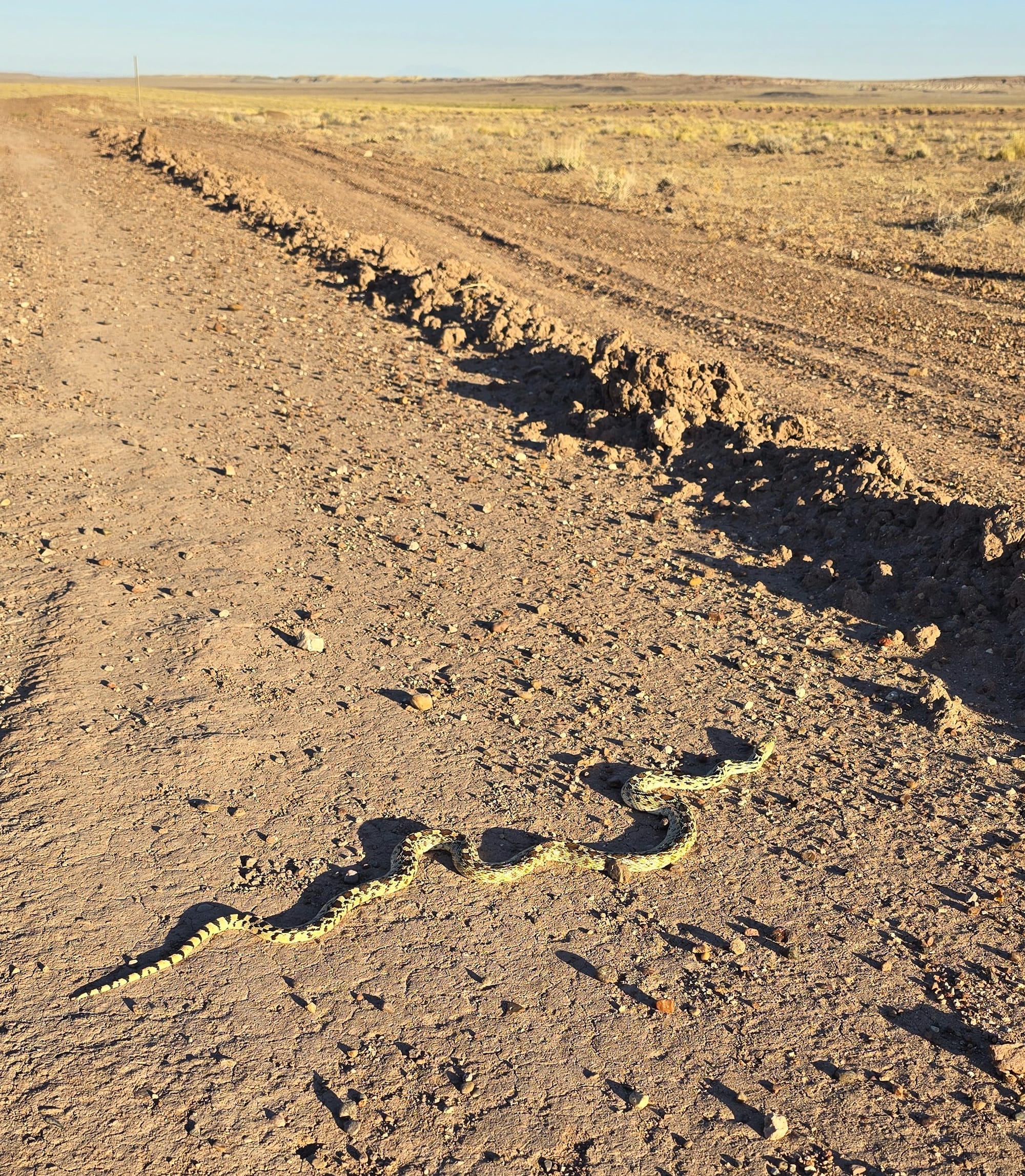

Friends from this training block. Left Bull Snake, Right Prairie Rattlesnake
Follow for more dispatches where I share my unfiltered thoughts, lessons learned, gear insights, and course reviews every week. Be sure to check out the next post as I dive into the race report for Blackout—an Aravaipa Running night event held in the dark pine forests of Ft. Tuthill, navigating the 27k distance under the stars.
If you found this helpful and want to keep your running journey consistent, don’t miss out on our future dispatches. We’re building a community of runners who value longevity over ego and practical habits over burnout. To get the latest strategies, gear insights, and motivation delivered straight to your inbox, sign up for the newsletter below. Let's keep chasin' those goals together—one manageable mile at a time.