Blackout Night Run
The Equalizer of Darkness
Toeing the line of any race comes with its own list of eccentricities. Toeing the line of a race that starts at 1900 and features a shorter, faster distance magnifies those eccentricities and shrinks any room for error. Blackout Night Run by Aravaipa Running does just that. You need a faster pace to stay competitive, but when you add the ultimate equalizer of absolute darkness, foot placement suddenly becomes a high-stakes game. Illumination can make or break your night, and sacrificing a little bit of flat-out speed for consistency becomes paramount. With three different distances 6k, 13k, and 27k there's a race for everyone.
One hurdle I hadn't fully considered, and had to adjust for on the fly, was the pre-race preparation. For a standard race that starts first thing in the morning, you have the benefit of a full night's sleep and the ability to start with a clean slate, fueled and hydrated specifically for the effort ahead. Starting in the afternoon completely upends that timeline. By the time you get to the line, you've already been awake all day, eaten multiple meals, and likely spent the day dealing with work or family. Suddenly, your lunch choice could become a questionable decision; you don't have eight hours of sleep to digest and clear your system before the whistle blows. Realizing this on race day was a bit of an "oops" moment, but I managed to adjust the math and hit it perfectly: a heavier, high-protein breakfast at 0600, followed by half a pizza at 1300, gave me sustained energy without that full, sluggish feeling at the starting line.
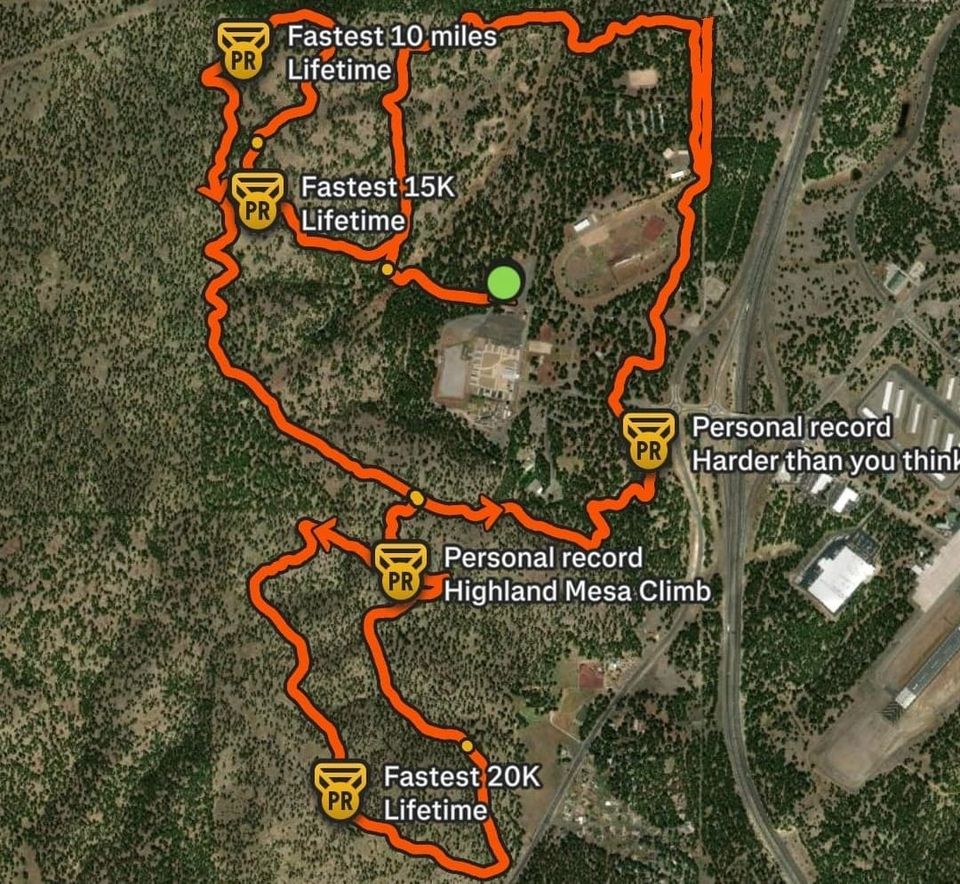
The pre-race vibes felt calmer than other Aravaipa events but still upbeat, positive, and full of energy as racers arrived in droves. We pulled in at roughly 1730 for gear prep and to get an early jump on the 1800 check-in and bib pick-up. This race brought a totally different headspace compared to Flag Crest. I wasn't nervous; what used to be anxious uncertainty was now mostly excitement and anticipation. Having signed up for the 27k distance, our start was locked for 1900, with the shorter distances staggered behind us. The course was a two-loop format on an 8.5-mile circuit, consisting primarily of single-track trail, with a few fast sections of access road and wider, groomed paths. With the runner's briefing complete and the countdown hitting zero, we broke through the start gate and surged into the cool evening air of Nor-Zona.
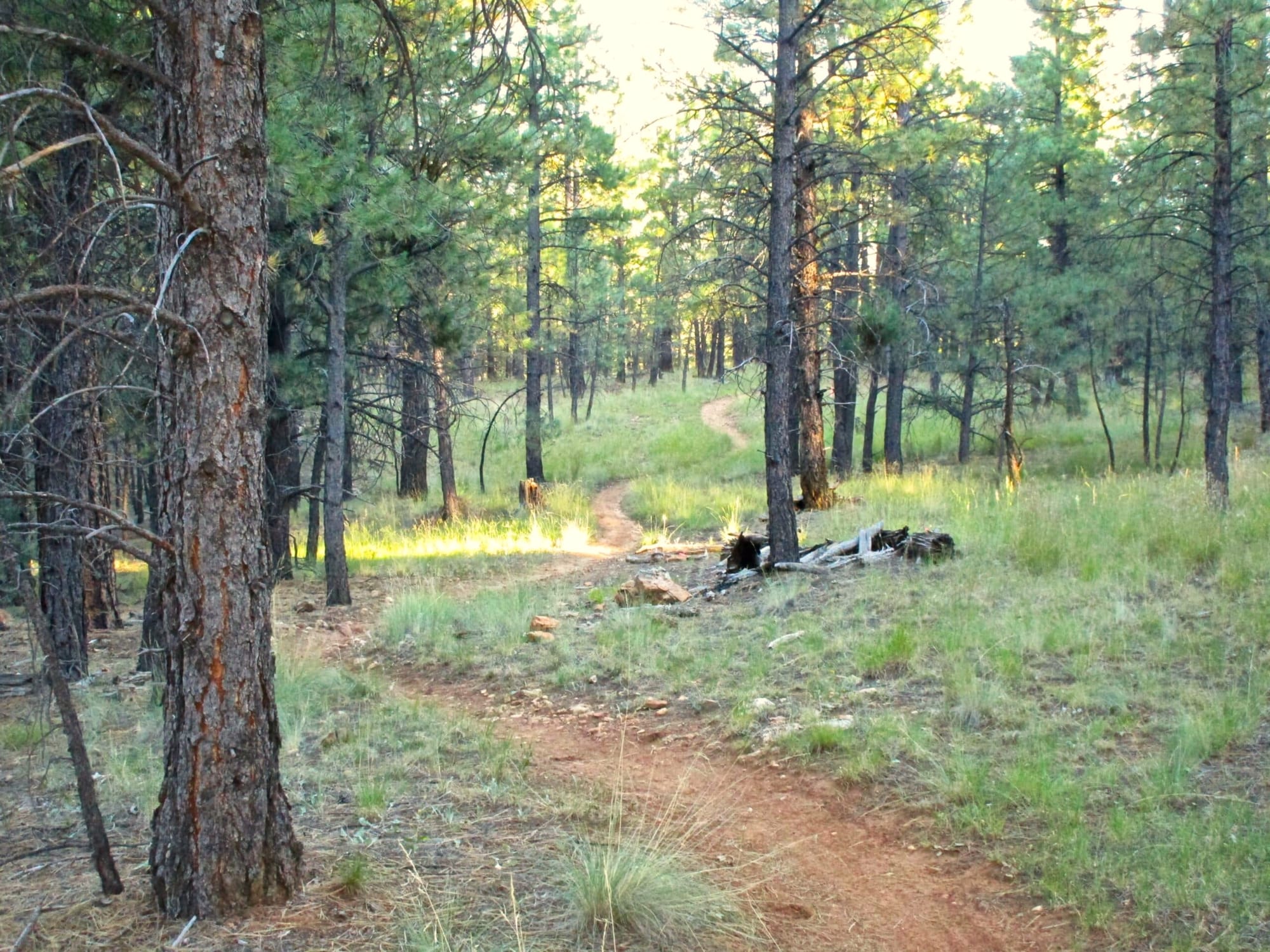
Following a dirt road for approximately a quarter-mile before hooking a left onto the single-track that makes up roughly 85% of the circuit, we headed straight up the first of two climbs on the course. I was joined for this race by my brother, who decided at the last minute that he didn't want to miss out on the adventure and signed up. For the first two miles we ran together, feeling out the terrain and getting a gauge for what we could expect ahead. Around mile 2.5, I made a move to pass a group of runners in an effort to escape the clouds of intrusive, silty dust being kicked up on the trail. Finally hitting clean air, I settled into a comfortable, slightly faster-than-normal pace of 9:30 minute mile and just cruised. The miles felt surprisingly comfortable, even at 7,000 feet of elevation, and before I knew it, we were dropping down the hill into the Highland Aid Station at mile 4.1, the only in-field aid station on the loop. After a quick water refill, I looked back expecting to see my brother, only to realize I had dropped him somewhere in the fray of passing other runners. I wouldn't see him again until I was leaving the start/finish aid station at mile 8.5 on my way out for loop two.
With the darkness setting in fast, it became a micro-race to see how far I could make it before the lights had to come on. If you have never experienced running in total darkness with only a headlamp to guide your way, it is something you truly have to experience to understand. I would highly advise logging a few training runs with your chosen lamp before toeing a race line. For this event, I chose the Petzl Iko Core, a rechargeable headlamp pushing 500 lumens on high output. At only 79g (2.7 oz), it’s an incredibly lightweight, high-powered option with more than enough battery life to run on high for the entire duration of the race.
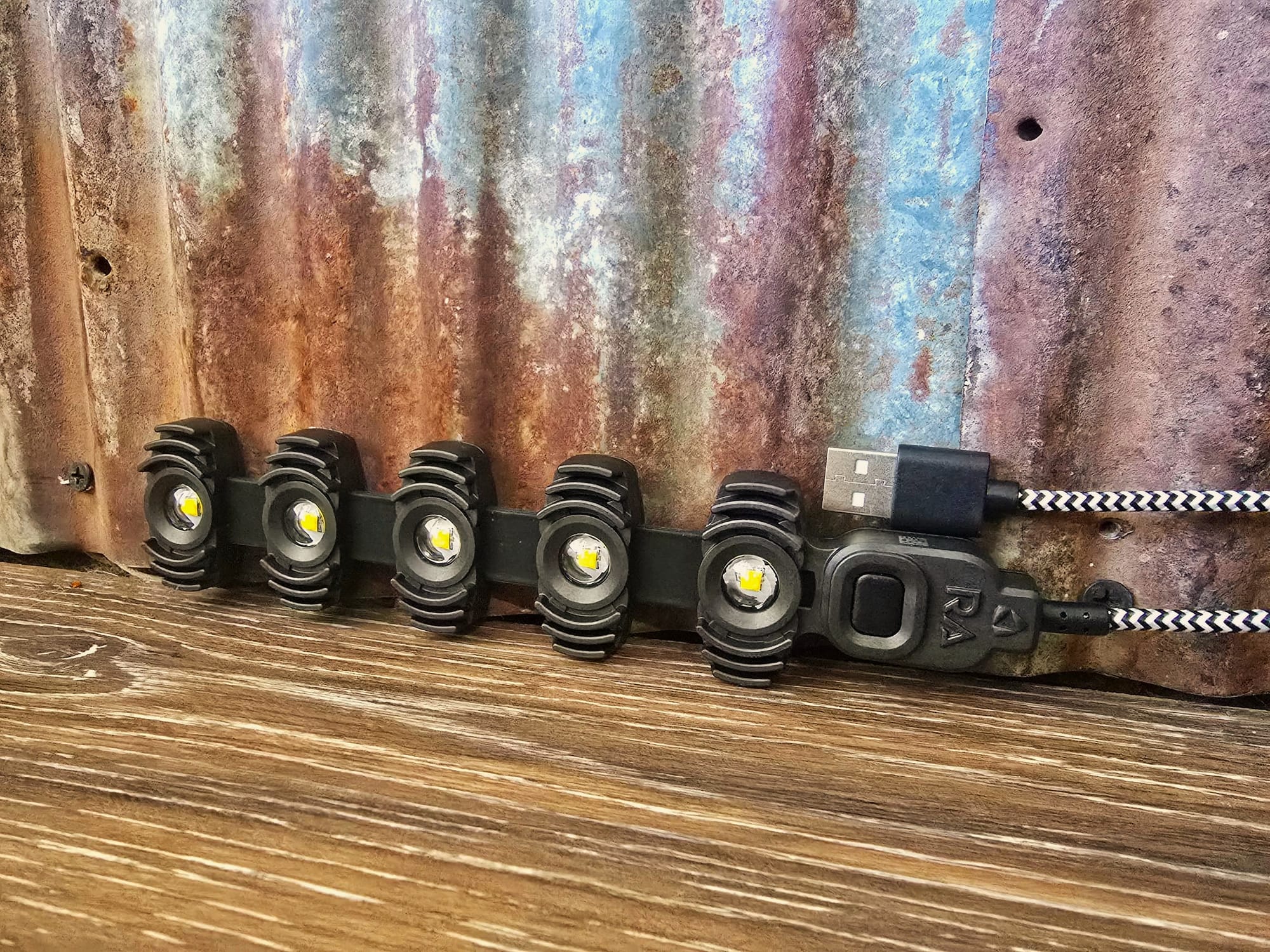
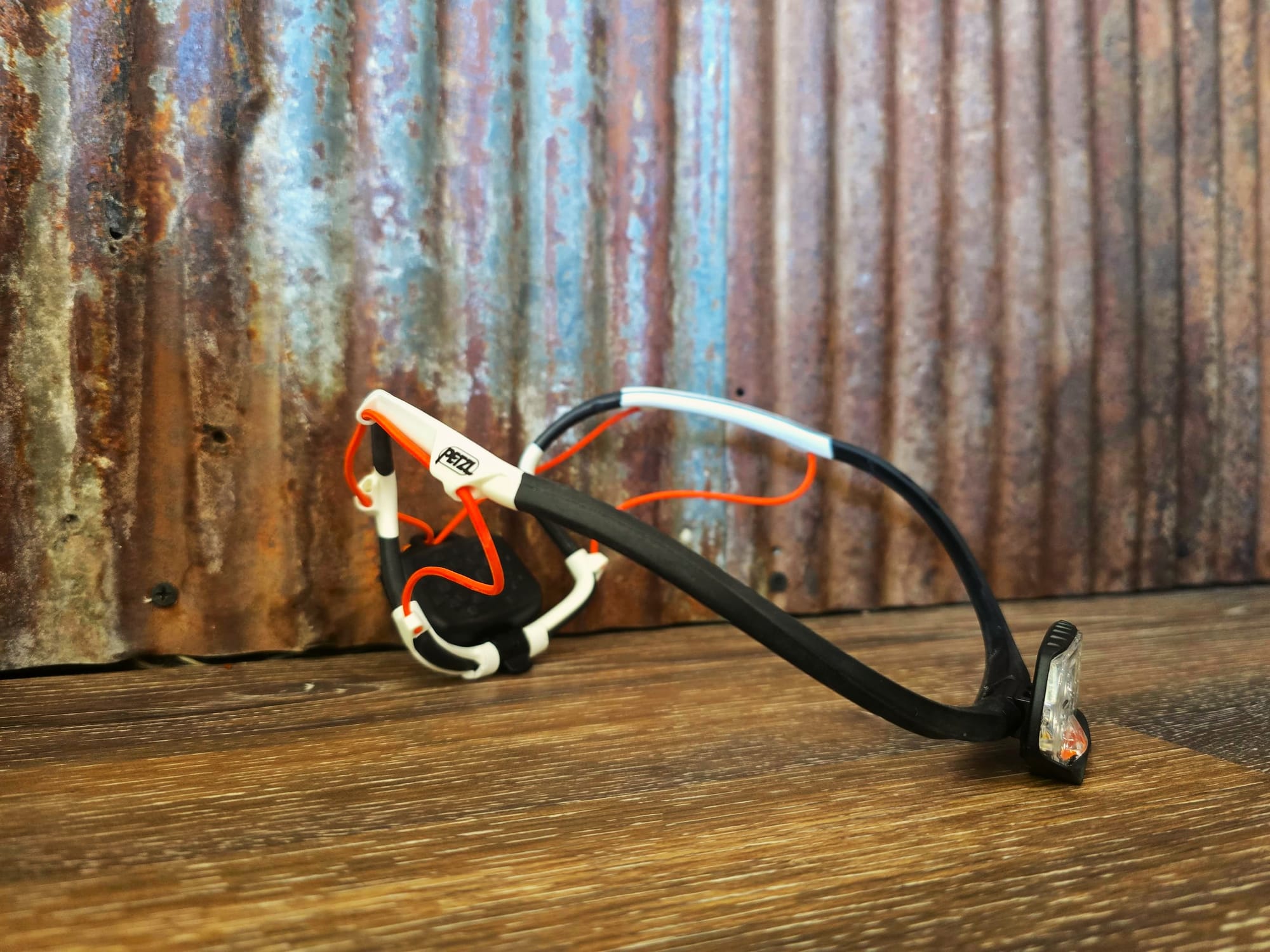
Left Kogalla Ra Ultra Trail Light. Right Petzl Iko Core Headlamp
However, even though 500 lumens is exceptionally bright, that power can actually become a downfall. A single source of bright light from your forehead tends to wash out the texture of the terrain, flattening out the rocks and roots into a two-dimensional blur unless you are looking straight down at your feet. To make that flat terrain effect even more challenging, the amount of dust suspended in the air reflects the light right back. It felt exactly like trying to drive through a heavy snowstorm with your high beams on; you couldn't see a thing. I was forced to drop the lamp down to its medium setting to kill the reflection, but that made reading the trail that much harder. I have since added a waist light to my night running equipment to hopefully combat the 2D flattening effect. By moving the light to your waist, it causes shadows, generating what has been effectively named "3D lighting." My waist light of choice is the Kogalla Ultra Trail Light, a five diode light bar that plugs into a battery pack flooding the area with 800 lumens of light.
Reaching the halfway point of the race back at mile 8.5, I met my wife and two daughters, who were crewing for me. After a quick water refill, a snack, half an energy drink, and kisses for everyone, I sprinted back into the darkness to tackle the final lap, passing my brother just before the left turn up the first hill.
This second loop would prove to be slower and infinitely more painful. On top of the flattened terrain and the reflective glare, the constant abrasion of silty dust in my eyes began causing actual vision issues. I normally have great vision and don't require corrective lenses, but after hours of kicked-up dirt, it felt like I was looking through a pair of filthy, smeared glasses that I couldn't clean. Everything became a blur. Moving forward, I will be experimenting with clear glasses on night runs as a first line of defense against both dust and low-hanging tree branches, plus I'll be carrying eye drops in my pack.
Having already taken one hard spill on the first loop, the deteriorating vision forced me to swallow my pride, dial the pace back to roughly a 12-minute mile, and focus entirely on foot placement. Even with the extra caution, the trail still claimed me. I tripped and crashed three more times on that second lap. The final fall coming only a half-mile from the finish line, and it hurt vastly more than the first three combined. I’m not sure if it’s because my body was just completely over it by that point, or if the fourth crash was legitimately worse, but it left a mark.
Lying in the dry forest dirt, which still held the warmth of the day, I looked back down the trail and saw the bobbing headlamps of other runners closing in. Willing myself back to my feet, my right hip aching from the latest impact, I pushed forward, knowing my brother was somewhere in the string of lights weaving their way through the dark. The trail markers ahead finally signaled the turn back onto the dirt road leading to the finish line. Once my feet hit the wide, graded road, I opened up my stride with whatever remaining energy I had left, dropping down to an 8:56 pace for the final quarter-mile.
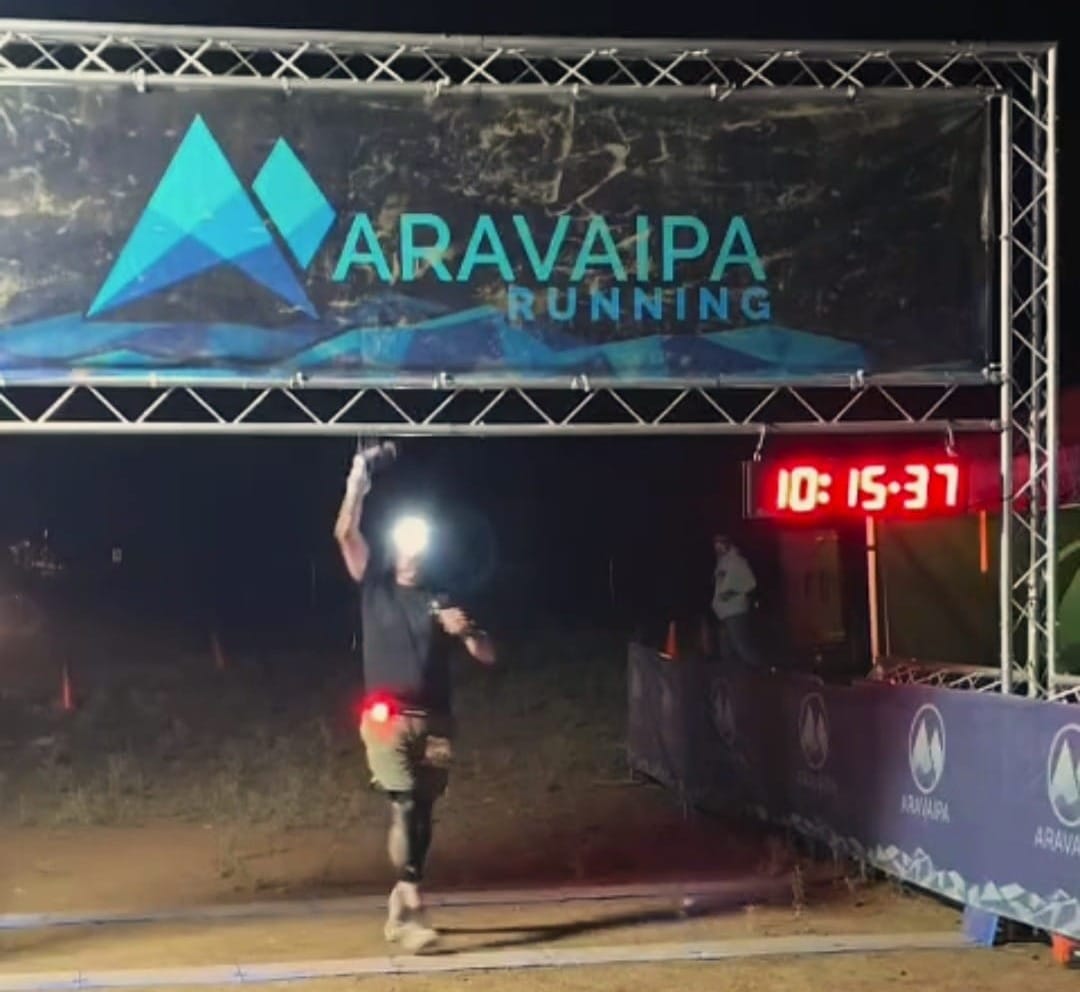
Crossing the finish in 3:15:37. I was just over my original three-hour goal, an excess caused almost entirely by the string of crashes and a minor navigational error in the final mile and a half, where I accidentally followed the wrong set of reflectors and had to backtrack to find the course. Still, I finished in the top third of the pack: overall 15th place out of 45 runners, 11th male, and 5th in my age group. Unlike my battle at Flag Crest, I managed to stay ahead of my younger brother this time; he finished almost exactly six minutes behind me at 3:21:56, taking 22nd overall.
My experiences with Aravaipa Running this year has been nothing short of awesome. Their events are always well planned, the trails are effectively marked (provided you're actually looking for the markers), and the atmosphere is always exceptional. The Blackout Night Run absolutely lived up to the name. It was a fast-paced, challenging distance that demanded total focus. It’s a stark reminder you have to respect the trail, because the moment you don't, the darkness finds a way to humble you.
You can find my baseline Pre Race Fueling and Hydration strategy Here.
If you'd like to see what my Recovery looks like after any of my races you can find that article Here.
If you found this helpful and want to keep your running journey consistent, don’t miss out on our future dispatches. We’re building a community of runners who value longevity over ego and practical habits over burnout. To get the latest strategies, gear insights, and motivation delivered straight to your inbox, sign up for the newsletter below. Let's keep chasin' those goals together—one manageable mile at a time.